Among vintage chronographs, there is a natural gravitational pull towards the so-called “Holy Trinity” of Patek Philippe, Vacheron Constantin, and Audemars Piguet. Within that trio, however, attention has rarely been distributed evenly. Patek commands the lion’s share of the attention, and rightfully so. The brand’s early perpetual calendar chronographs – the reference 1518 and 2499 – are as blue chip as it gets in the world of vintage watches, and I believe the non-perpetual reference 1463 is truly a perfect design (and my favorite of Patek’s mid-century chronographs).
Patek’s two supposed “peers,” however? Well, they don’t get quite the same amount of love, but for different reasons. In the case of Audemars Piguet, it is mostly a function of production volume, as the brand produced only 307 chronographs (total!) from 1930-1946 and then abandoned chronograph production entirely until the 1990’s. Early Audemars Piguet chronographs are revered by collectors, but it’s rare to see more than one in a given auction catalog each season and there is very little standardization.
Vacheron, on the other hand, tends to lag behind both in terms of auction results, and the reasoning is hard to fully unpack. From a pure numbers standpoint, Vacheron’s production was much greater than Audemars Piguet, but was comparable to the Patek Philippe reference 130 (both in the low/mid-1,000s over multiple decades), and it remains difficult to source excellent examples. As Ben Clymer has noted, it often comes down to the simple reality that Vacheron is “not Patek Philippe,” despite how closely the two brands compare on pedigree, craftsmanship, and design. For collectors willing to look past that simple fact, Vacheron’s vintage chronograph catalog represents some of the best value in the market.
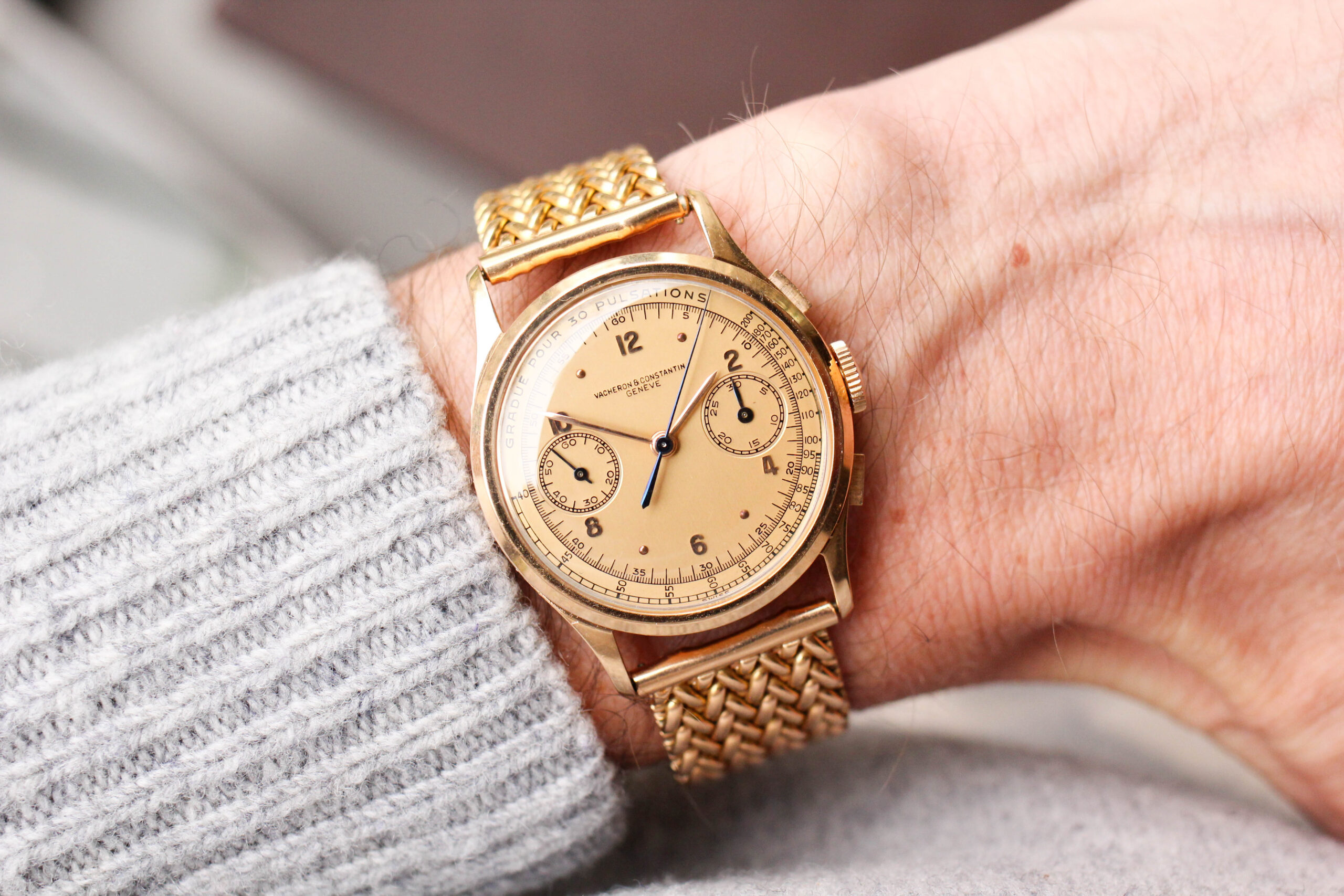
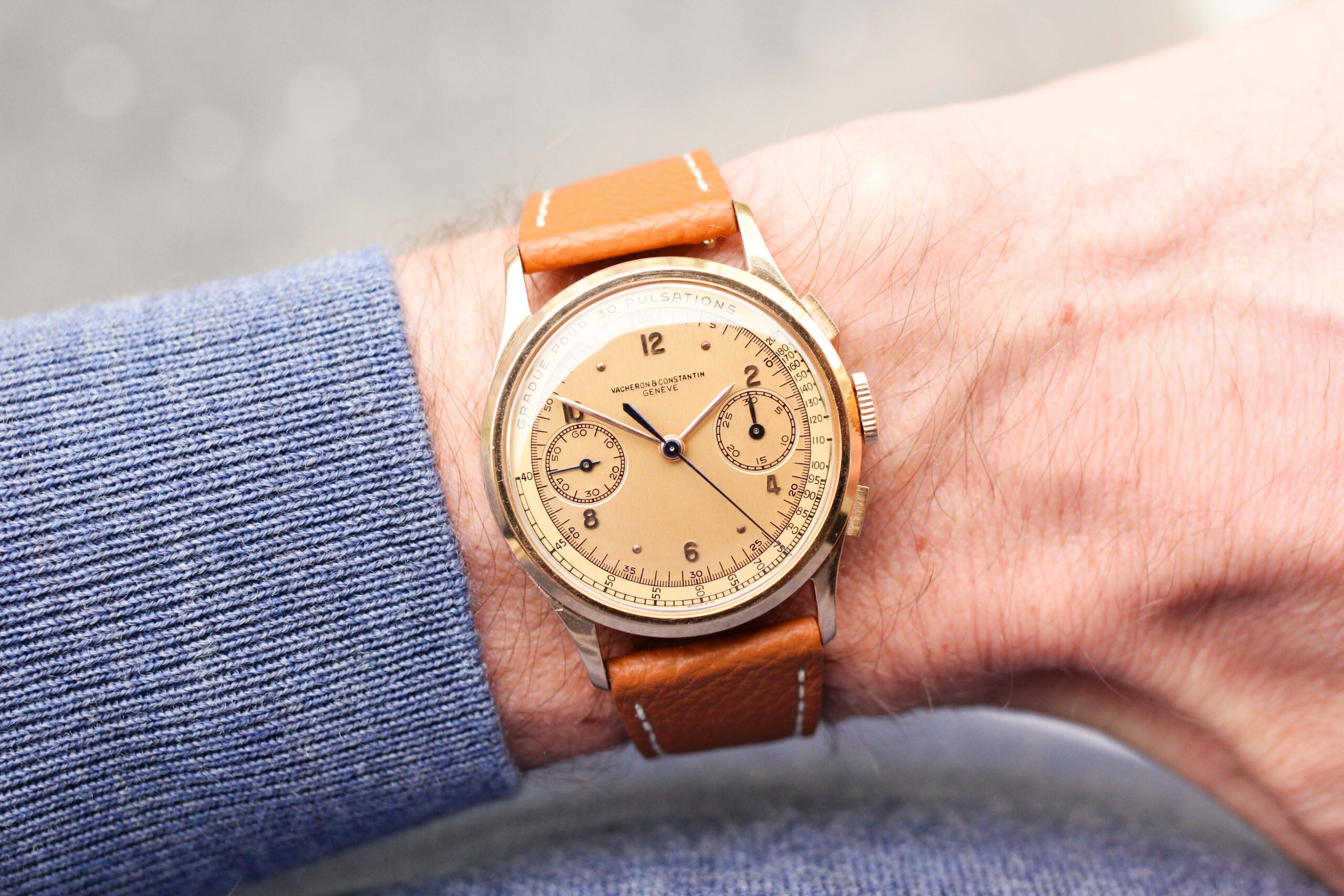
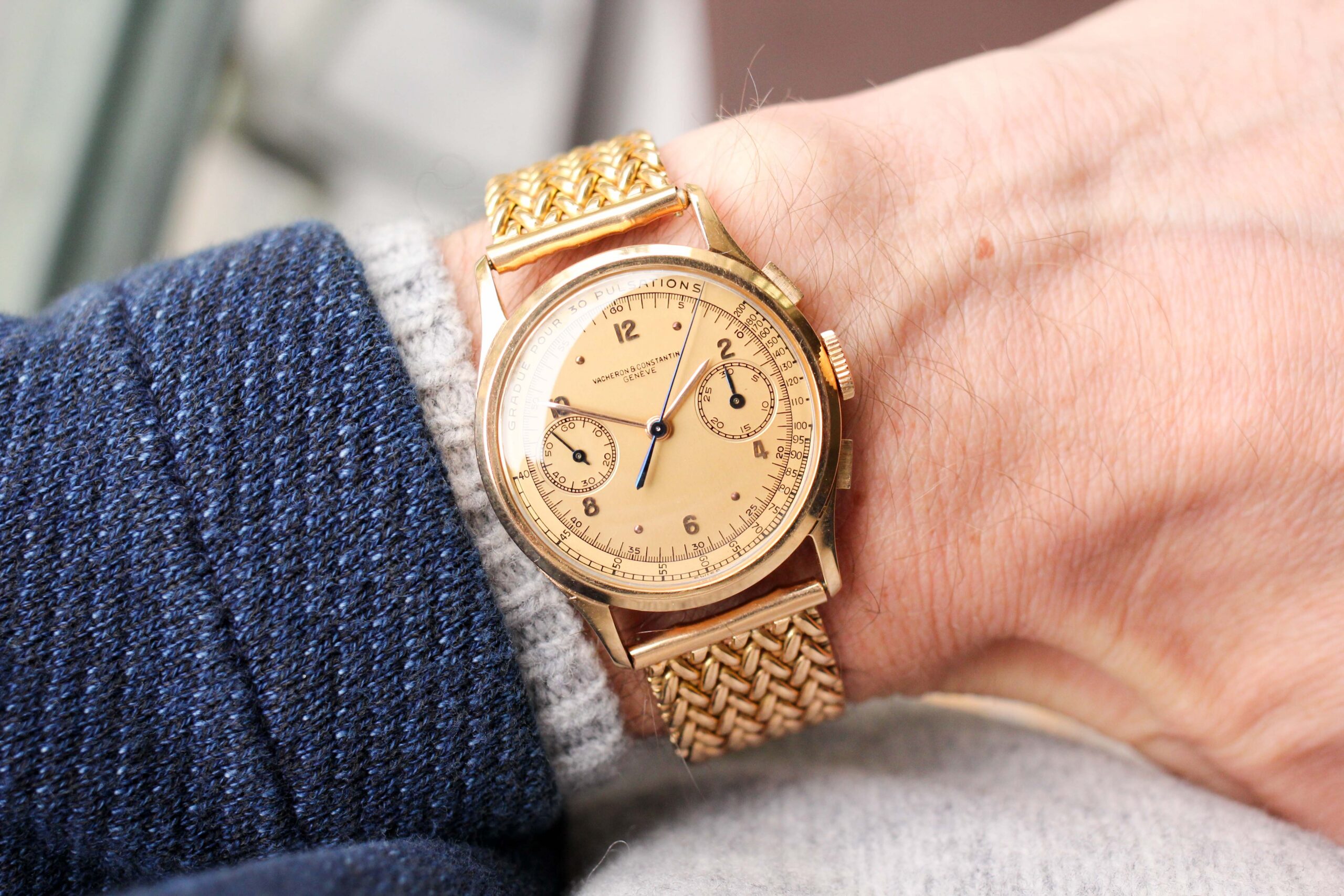
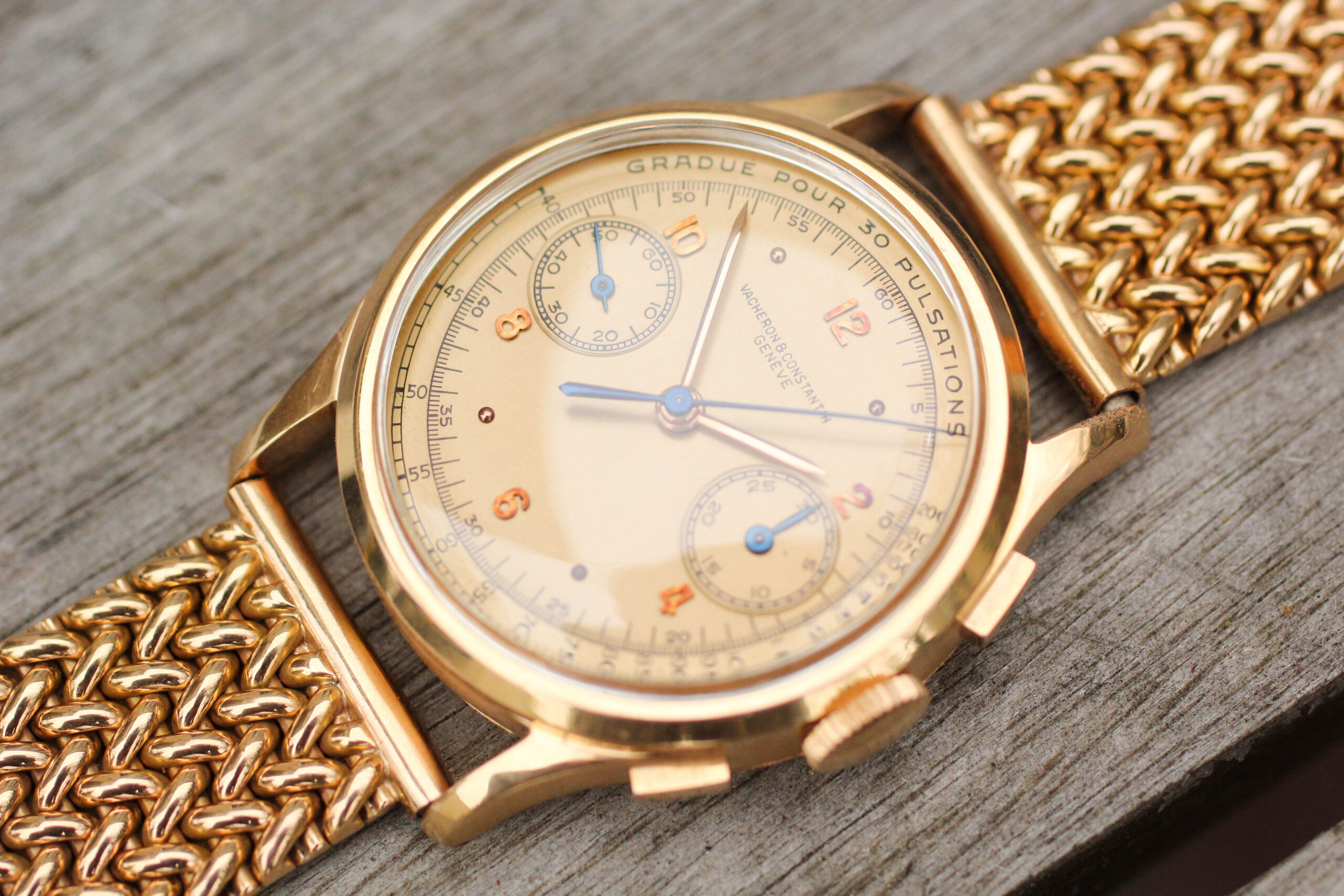
The reference 4072 was Vacheron Constantin’s most important two-register chronograph, as it was introduced in 1938 and was produced continuously into the early 1970s. Cased almost exclusively in yellow gold and powered by a manually wound column-wheel movement based on the Valjoux 22, it embodies the restrained and elegant approach that defines Vacheron at its best. Cases are typically around 34mm (sometimes measured at 34.5mm) with flat, sculpted lugs and snapback (non-waterproof) cases.
What makes the 4072 particularly compelling to collect, however, is the remarkable variety that emerged across more than three decades of continuous production.
Dial Variants and What to Look For
Part of what makes the 4072 so interesting, and at times overlooked, is the sheer breadth of its dial executions. The reference was produced for over 30 years and across 1,178 examples, which led to a dizzying array of configurations: tachymeter, pulsations, telemeter, and even multi-scale dials, as well as some rarely seen no-scale dials. A quick scroll through Phillips’ 23 previously sold 4072 lots, for example, provides an indication of the diversity in 4072 variations, as no two lots are identical.
In a modern watch industry that has moved towards standardization and highly efficient supply chains, the 4072 appears to have been subject to the whimsies of whatever Vacheron’s design department was interested in that week.
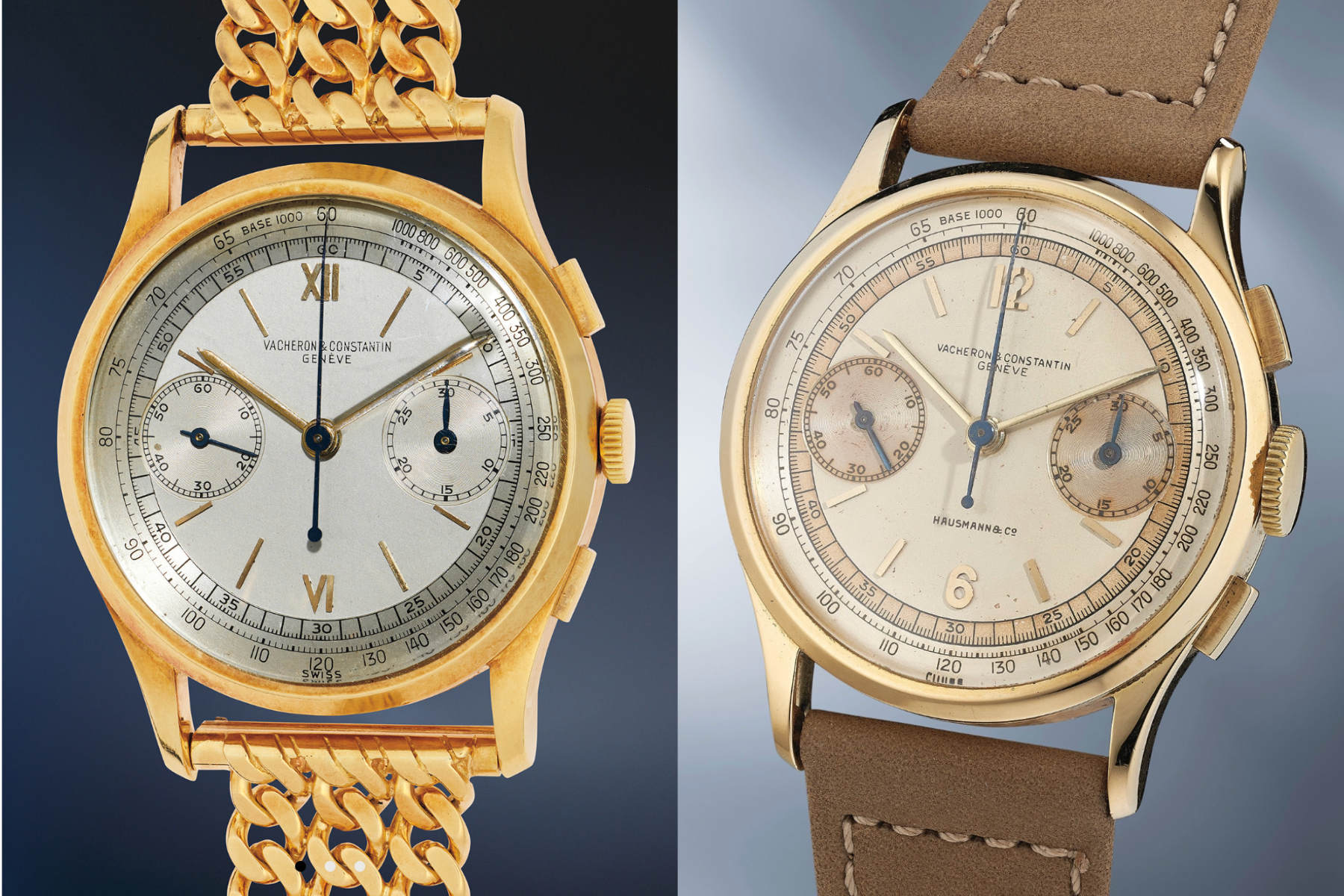
Despite this inherent diversity, there are several distinct “eras” of the 4072 dial design, which have been explored in great detail by Tony Traina (here). While his comprehensive overview goes into great depth, I think the general dial designs can be grouped into three distinct categories:
- #1: Early Printed Dials: These dials did not have applied indices / numerals and were the earliest iterations of the 4072. From a collectability standpoint, early sector dials (such as this one) tend to command the strongest prices from this era.
- #2: Applied Numerals, Early Signature: The next era of the 4072 was a notable evolution from early printed dials, moving to applied Arabic and Roman numerals while retaining the raised, simple VC signature above the center hand stack. These dials were often two-tone and featured baton or “bead” hour markers in addition to applied numerals. Collectors often gravitate to this era of 4072 dials, and comparisons to the Patek 130 and 1463 often stem from the similarities of the dials.
- #3: Baton Markers, Cross Signature: The final major dial variation was the last to be produced and added an applied gold cross above a blockier version of the Vacheron signature. Arabic and Roman numerals were foregone for simple baton markers throughout the dial. The visual identity of these dials is quite different from prior generations and they are often the most accessible from a price standpoint.

From a collectability standpoint, the second “era” of 4072 dials with applied numerals calls to me more than others. Many of the early printed dials are somewhat austere (sector dial and two-tone dials aside), while the third generation lacks the balance and beauty of earlier generations.
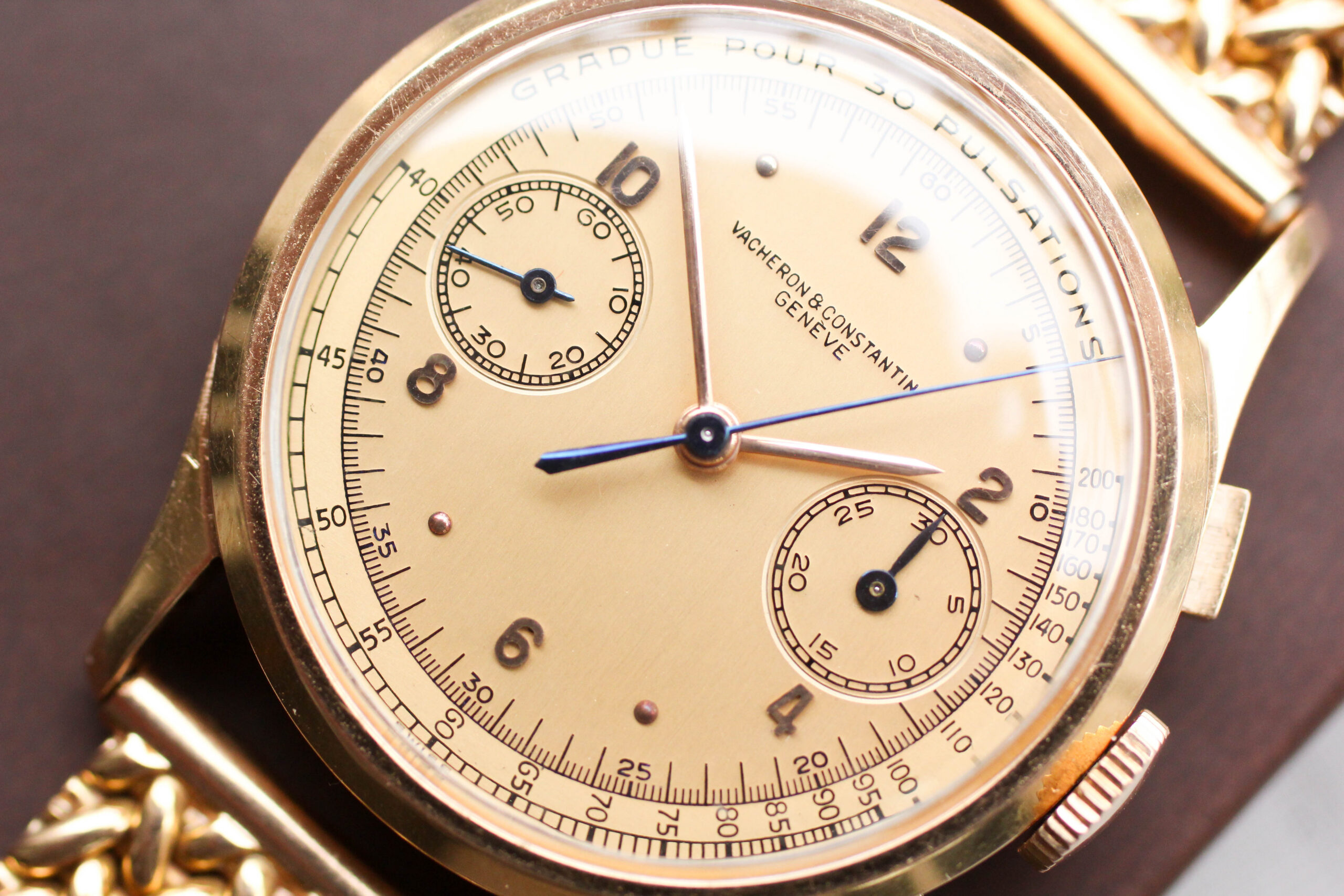
The example that is the subject of this article falls squarely within the second generation: applied Arabic numerals, a warm two-tone dial, and the earlier raised VC signature above the hand stack. To my eye, it is a beautifully balanced design that has aged gracefully and is just as desirable today as it was sixty years ago.
Patience Rewarded
A couple of years ago, my close friend and vintage superdealer, Adam Golden of Menta Watches, set Instagram ablaze with one of the best 4072 examples to surface in years. The watch was shown at the 2024 Original Miami Beach Antique Show (“OMBAS”) and was one of those watches that stopped me in my tracks and immediately re-prioritized my “hierarchy of new watch needs.” And it wasn’t just me, as that original 4072 was largely regarded as “Best In Show” at OMBAS 2024 and garnered – at least what seemed like – the most online attention of any watch there.

With no true expectations of another mint pink-on-pink gold example surfacing any time soon, I asked Adam to keep an eye out for similar examples and that I would be a buyer with no questions asked.
Finding a comparable example took time (two years, to be exact) but in December 2025, I received an excited call from Adam. He had unexpectedly sourced yet another pristine example from south of the equator, in nearly the same configuration as the prior one with the exception of Arabic vs. Roman numerals. There was nothing for us to go on aside from a couple of blurry pictures, but I committed to the watch on the spot.
Fast forward another month, and I received a FaceTime call from Adam. The watch had arrived, and as he unboxed it and hurriedly held it up to the screen, it was clear that it was in exceptional condition. More poetically, Adam exclaimed “this thing is f***ing SICK.” With nothing more than a couple of poor pictures and a quick FaceTime, the deal was solidified and it was sent off for servicing.
Fatefully, the servicing was completed days before OMBAS 2026, which I had already made plans to attend, and we agreed that I would pick up the watch (and see it for the first time in-person) at the show. We filmed the pick-up for Adam’s excellent YouTube channel, and as you can see in this video, I was grinning like a schoolkid when I held the watch for the first time.
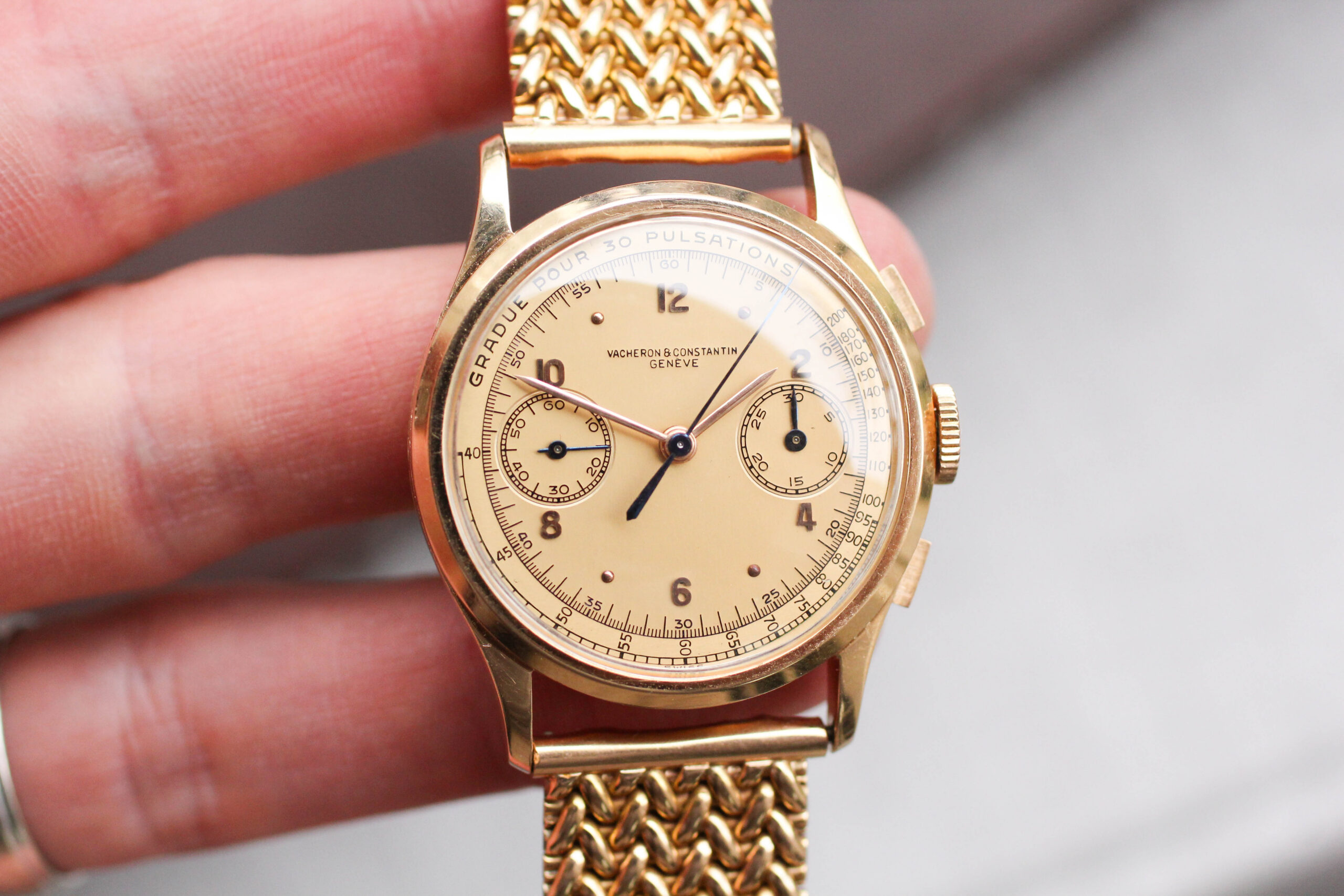
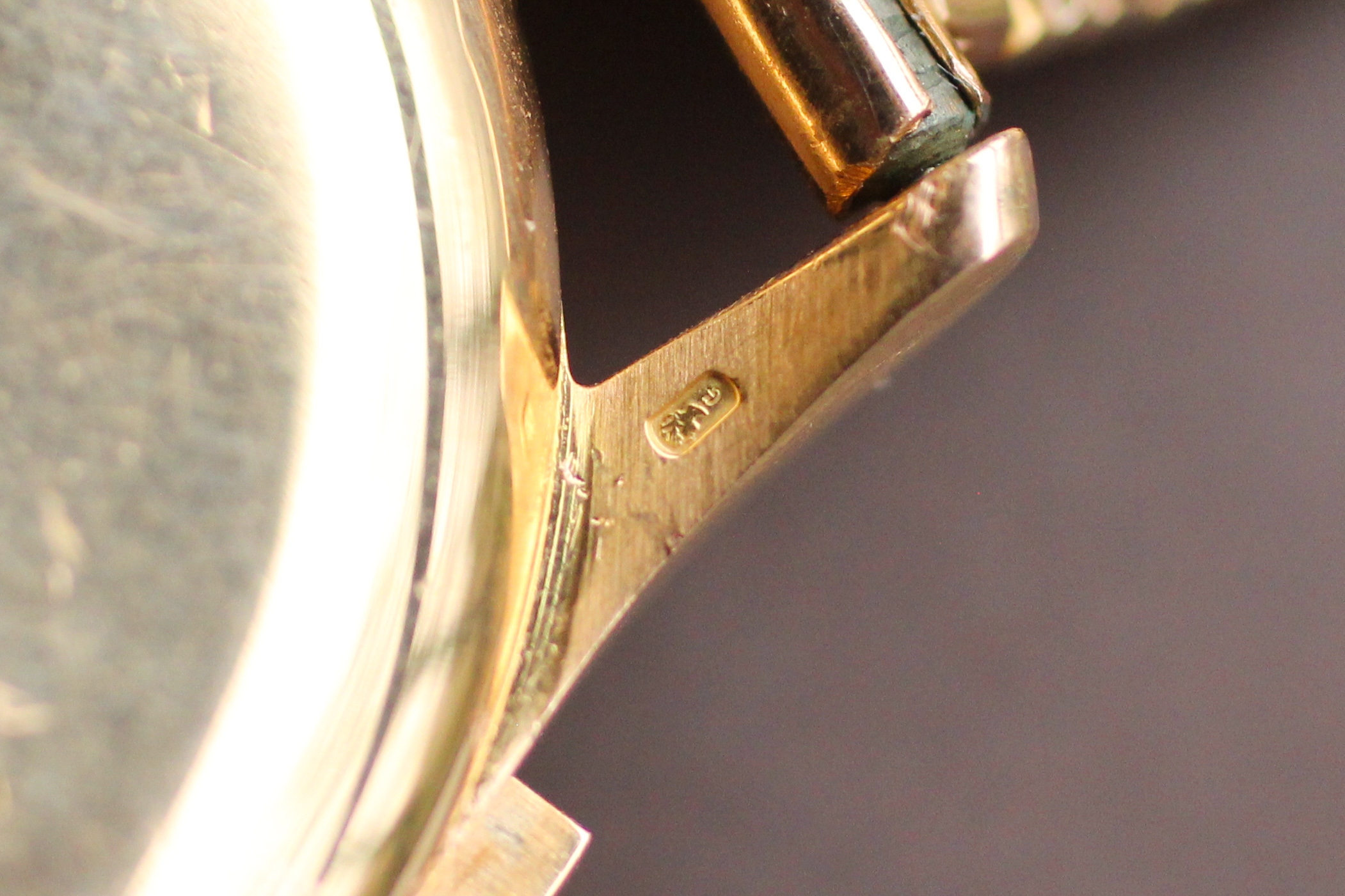
Without hyperbole or exaggeration, the condition is simply incredible. The dial is in mint condition, with a two-tone pulsations scale on the outer track. The case is razor sharp, with deep hallmarks on the mid-case and under one of the lugs – as well as a faint engraving of the original inventory number under one of the lugs, a practice consistent with the Uruguayan retailer Freccero & Cia during this era.
And then there is the caseback. Engraved simply: “To Jose Luis, From Mom & Dad,“ and dated April 1968 in beautiful flowing cursive.
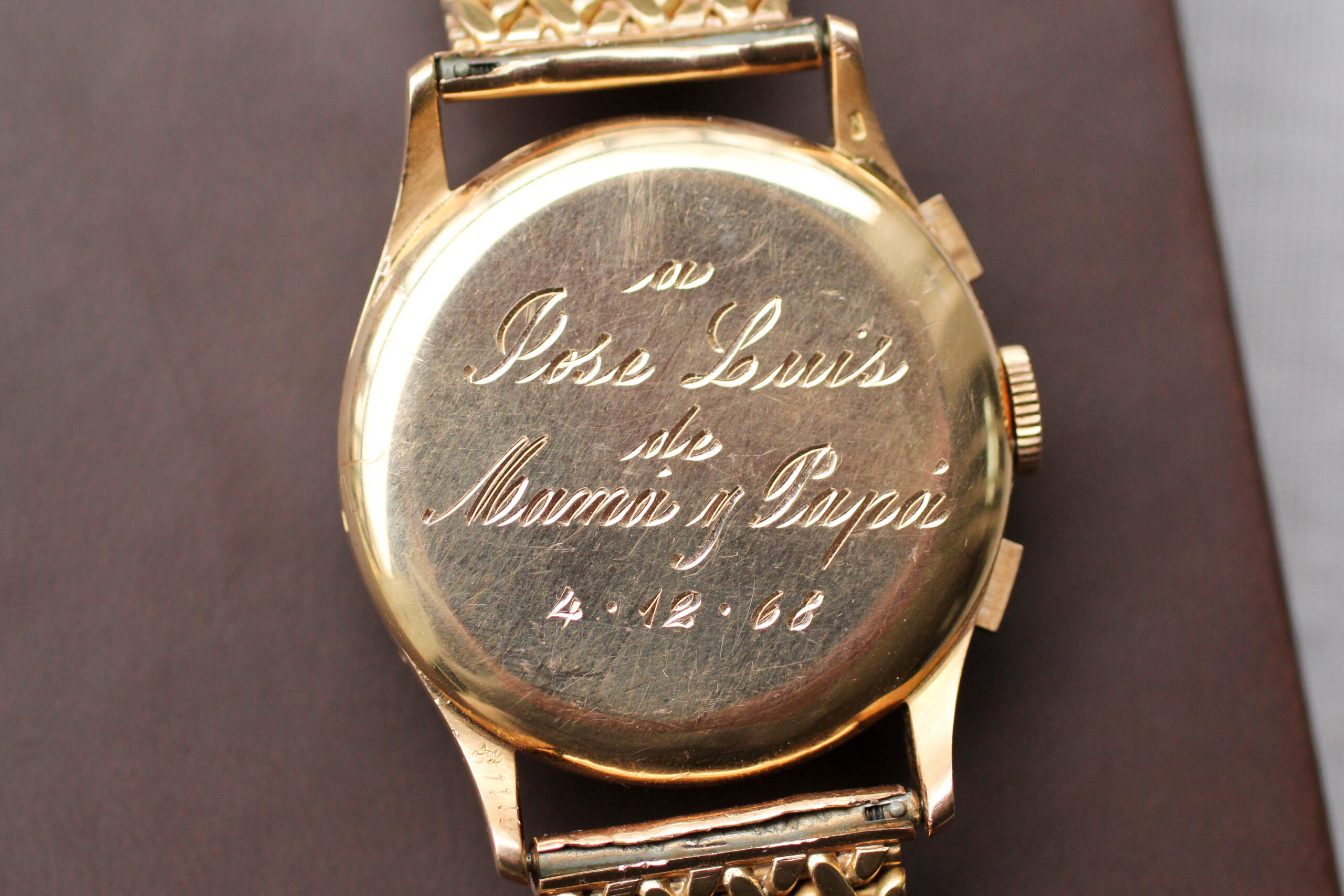
Landing exceptional vintage watches is often an exercise of patience, and that was certainly the case for my journey to this 4072. In the case of this search, however, my patience was handsomely rewarded and I am grateful for Adam’s work to uncover this gem.
Market Comparisons
It’s at this point that we should talk about comparable options in the market for discerning buyers. Collectors occasionally draw comparisons to high-end chronographs from Longines and Universal Genève, both of which produced beautifully finished two-register pieces during the same era. But in terms of overall component quality and finishing, I believe the only true peers to the 4072 are found within the Holy Trinity – and specifically Patek Philippe, given AP’s extremely low volume and lack of chronograph production post-1946.
In my experience, the iconic Patek 1463 is often cited as a competitor to the 4072, and the comparison is understandable on the surface: both are the most prominent non-perpetual chronographs from their respective brands, they were produced alongside each other for an extended period, and both sit at the top of their brand catalogs in terms of collector interest (perpetuals aside).
With all of that said, I think the 1463’s waterproof screw-back case and decidedly sportier construction (I mean…those pushers) place it in a somewhat different category than the 4072, and the more honest comp within Patek’s catalog is the reference 130.
Patek Reference 130
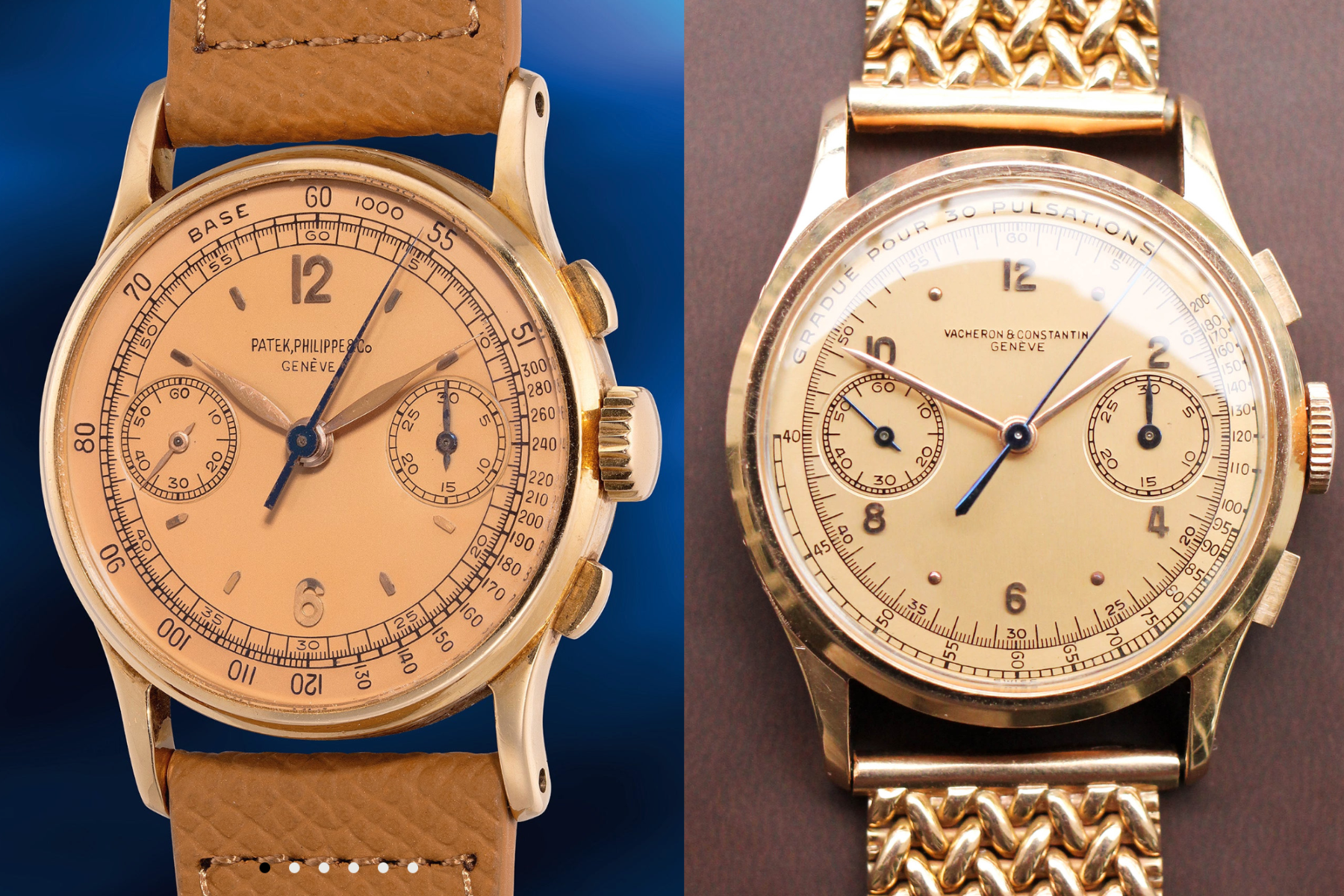
The Patek Philippe reference 130 is, in my view, the most natural comp to the 4072 – a dress chronograph of comparable production volume, similar design language, and the same lofty finishing standards. On the wrist, the reference 130 wears well, but noticeably smaller than the 4072 due to its longer, thin lugs and smaller diameter of 33mm. The reference 130 was produced from 1936 to 1964 in approximately 1,500 examples, which is also quite comparable to Vacheron’s production of the 4072.
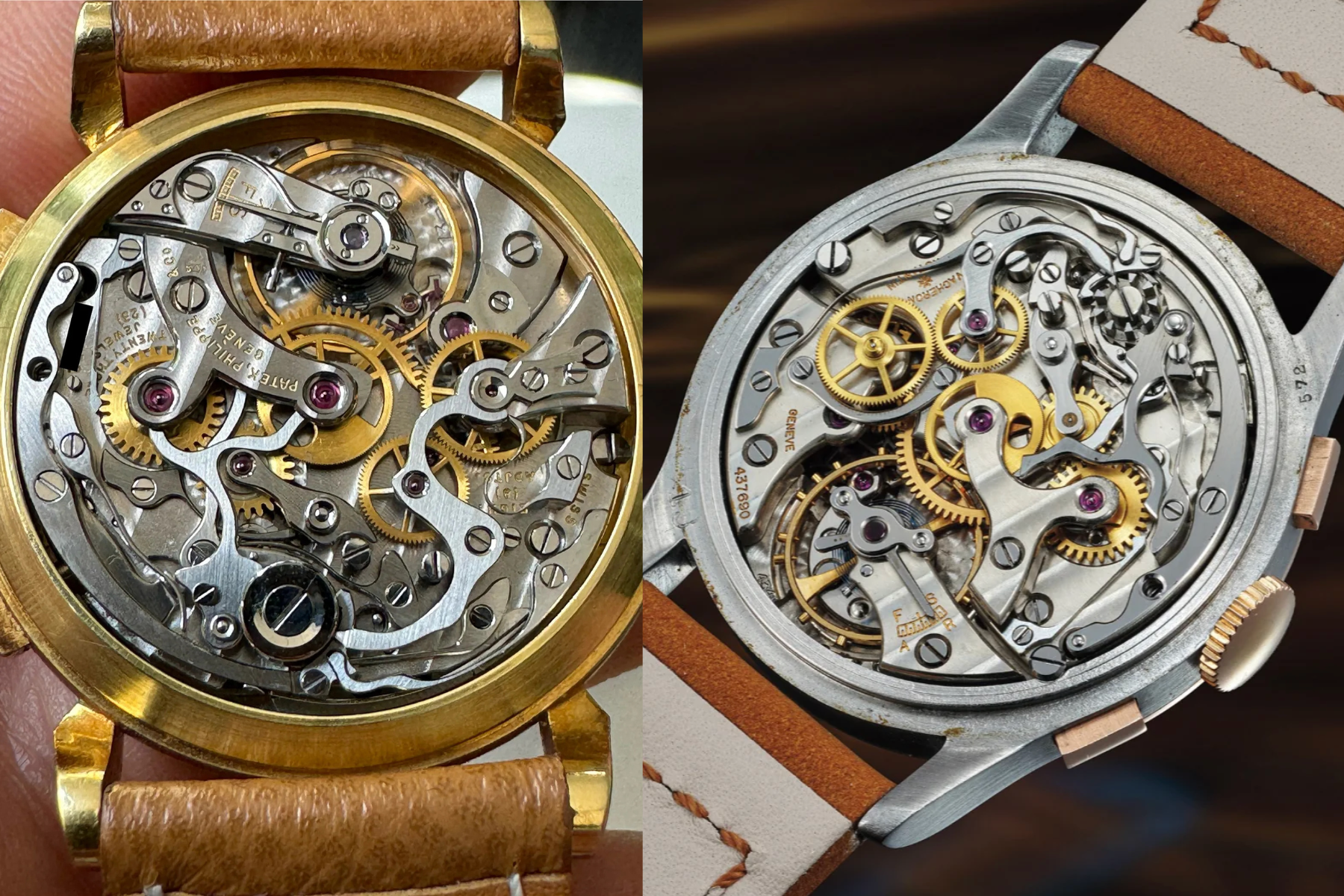
Continuing the similarities, the Patek 130 and Vacheron 4072 movements were both based on Valjoux calibers (the Valjoux 13 and Valjoux 22, respectively) and were highly modified as well as finished to a higher standard. See below for a comparison of the Patek caliber 13-130 and Vacheron’s caliber 434.
As of early-2026, strong examples of the Patek 130 command $75-100K at the low-end and can scale significantly for very rare examples, which represents a ~50%-100%+ premium to top examples of the 4072. Whether that’s justified or not comes down to the eye of the collector, but there’s no denying that the Patek Philippe name carries significant weight in the pricing discrepancy, given all of the similarities between the two models.
Patek Reference 1463
At the top of the non-perpetual chronograph mountain sits the Patek 1463. As noted earlier, the two references are often compared despite the 1463’s sportier leanings – its waterproof François Borgel case and “tasti tondi” engraved pushers create a very different feeling on the wrist than the 4072’s more classical construction, even if only about a millimeter separates them in diameter. Powered by the caliber 13-130, the 1463’s dials share obvious DNA with both the 130 and the 4072, but the case’s thicker proportions and slightly larger presence on the wrist are what truly set it apart. Oh…and those pushers.
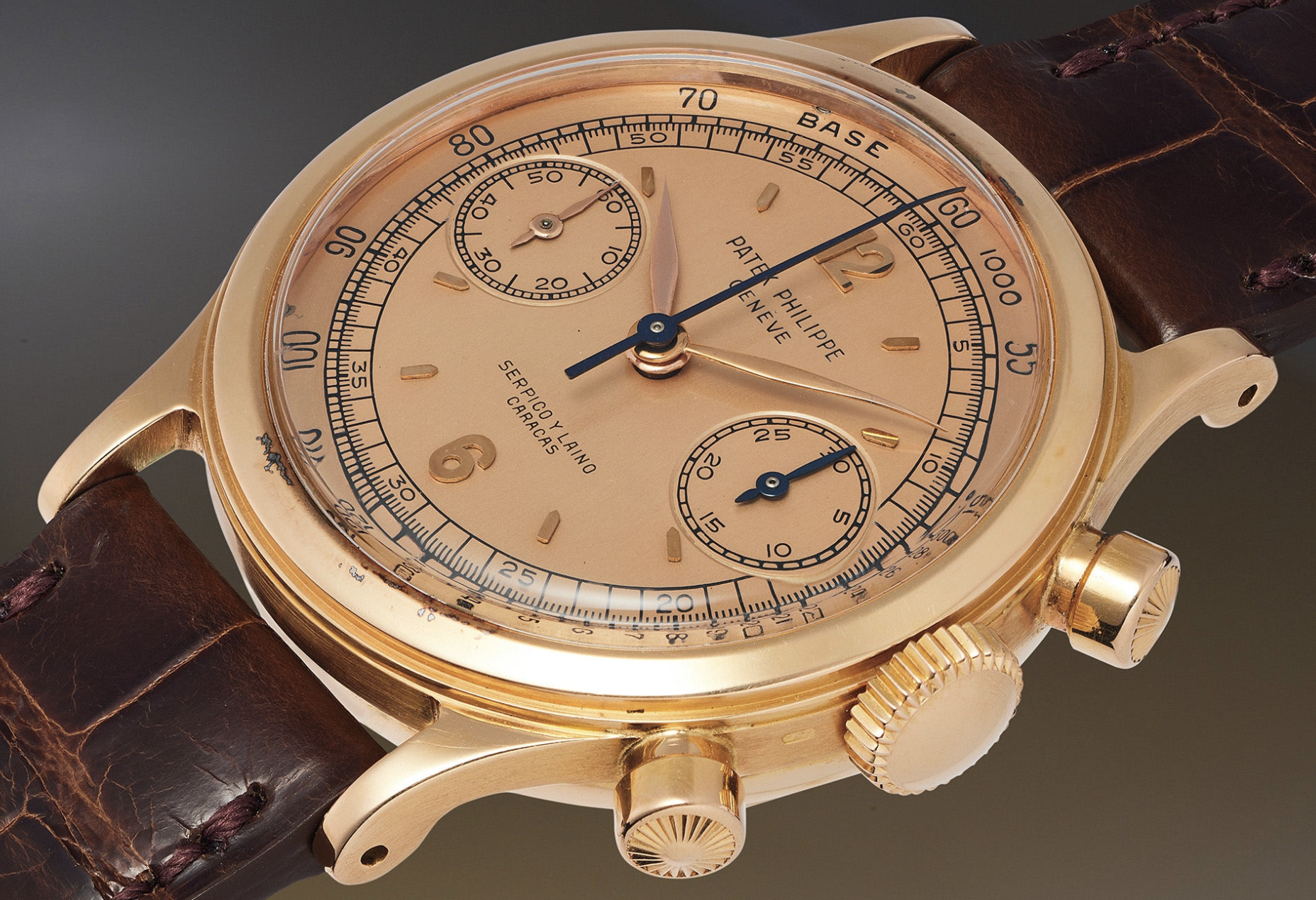
When price enters the picture, the comparison becomes striking. The example pictured above sold at Phillips’ New York Watch Auction Nine in 2023 for $565,150 – exceptionally well preserved with a double-signed dial, but not altogether different in spirit from the 4072 that Adam unearthed at OMBAS in 2024. That result represented nearly 10x what a comparable 4072 would bring today. Even setting aside the outlier potential of auction results, strong examples of the 1463 in more common configurations currently trade in the $200-250K range, which remains many multiples of what a collector would pay for a comparable 4072.
Closing Thoughts
The 4072 has always occupied an interesting position in the collecting universe: well-documented and understood by those who know it, but consistently underestimated by the broader market. In my opinion, part of that is the Vacheron discount that has followed the brand’s vintage chronographs for years and the other part is the sheer breadth of the reference, which can make it feel harder to get one’s arms around than a more tightly defined reference.
Ultimately, the quality of a well preserved 4072 is indisputable and the reference wears perfectly on the wrist. Especially when compared against the Patek 130, I believe the 4072 stands out as one of the remaining “value buys” within mid-century chronographs from the Holy Trinity.
Many thanks to Tony Traina for his deep dive on the 4072 (here) and continued advocacy for the reference!